Information Technology

About the Department
Information Technology (IT) is a specialized branch of engineering dedicated to designing, developing, managing, and securing information systems and digital infrastructure. It covers a wide range of areas such as software engineering, cloud computing, cybersecurity, data analytics, networking, and artificial intelligence. IT professionals engage with advanced technologies including blockchain, the Internet of Things (IoT), big data, and automation to improve efficiency, enhance security, and strengthen connectivity across various sectors. As digital transformation accelerates globally, the IT domain continues to expand, fostering innovation in industries like healthcare, finance, business, and communication. With the growing need for scalable, reliable, and intelligent technological solutions, Information Technology remains a key driver in shaping the digital landscape and advancing global technological progress.
Department Details
Vision
"To emerge as a leading center in Information Technology education, research, and innovation by promoting the creation and sharing of knowledge, and by nurturing skilled IT professionals who effectively contribute to national development and address global challenges."
Mission
Department of Information Technology is committed to,
- To deliver value-based education in Information Technology through an effective integration of theoretical knowledge, practical exposure, and innovation.
- To encourage research, development, and consultancy in emerging IT domains to meet local, global, societal, and industrial needs.
- To develop technically proficient, ethically responsible, and globally competitive professionals dedicated to lifelong learning and sustainable development goals.
Program Educational Objectives (PEO)
The B. Tech Information Technology programme has the following Programme Educational Objectives (PEOs):
- PEO 1: Graduates of the program will be proficient in identifying, formulating and solving complex problems by applying their knowledge of mathematics, science and Information Technology principles.
- PEO 2: Graduates of the program will be capable of analysing, designing, implementing and managing software projects through continuous learning and use modern tools to meet real-world constraints.
- PEO 3: Graduates of the program exhibit professionalism with ethical attitude, communication, team work and will contribute to society needs.
Key Highlights
Good placement records since from the inception of the program.
Over 50+ students actively participated in Symposiums, Hackathons, Paper Presentations, Conferences, and Workshops at reputed institutions.
Strong industry collaborations with VPS code builder, INETZ technologies, GRASPEAR solutions, and KAIZEN Tech Soft.
Department Details
| Category | Details |
|---|---|
| NBA accreditation | 2023 |
| Best Industry linked department award | — |
| Research centre | — |
| Faculty members awards and fellowships from | — |
| Sponsored research projects | — |
| Publications by faculty in national and international journals | 3 |
| Students awards from | Over 50+ students actively participated in Symposiums, Hackathons, Paper Presentations, Conferences, and Workshops at reputed institutions like MNM JAIN COLLEGE, JEPPIAR UNIVERSITY, NPSBCET and PONDICHERRY University |
| student's projects in association with | Vcodez, fldsmith and Other leading private industries |
| MoU | VPS code builder, INETZ technologies, GRASPEAR solutions private limited, KAIZEN Tech Soft |
| International certification course | Oracle |
Milestones
| Year | Milestone |
|---|---|
| 2001 | Establishment of the Information Technology department |
| 2012 | The Department of IT received permanent affiliation from Anna University |
| 2022 | Sanctioned intake for the IT course was increased from 60 to 120 students. |
| 2023 | The reported total strength of the IT department is 120 students. |
| 2024 | B.E intake increased from 120 to 240 |
Laboratory Facilities
System Software Laboratory
The objective of the System Software Laboratory is to familiarize students with various open-source operating systems, particularly Linux and Debian-based distributions such as Fedora and Ubuntu. The lab facilitates practical sessions for courses including Data Structures and Algorithm Analysis, C Programming, and Java Programming. It also supports software development projects in C, C++, Java, and Python.
With a high-end projector installed, the laboratory is additionally used for project reviews, training programs, one-credit courses, and value-added courses. Furthermore, MATLAB software is available to support learning and project work. The lab is well-equipped with 40 high-configuration personal computers to ensure an effective hands-on learning experience.
Equipment & Facilities:
- 40 High-Configuration Personal Computers
- Linux / Ubuntu / Fedora Operating Systems
- MATLAB Software
- High-End Projector for Training & Reviews
- Development Environment for C, C++, Java, Python
Network Laboratory
The Network Laboratory offers hands-on training to undergraduate students in the fundamental and advanced concepts of Computer and Communication Networks. It emphasizes experiential learning and supports experimental research in communication networking, with recent contributions in the areas of networking and network security.
The lab enables students to understand the significance of data communication and the Internet in business operations and everyday activities. It demonstrates how communication occurs within data networks and the Internet, highlights various internetworking devices and their functions, and explains the role of protocols in networking.
Equipped with the latest configuration PCs, a well-connected server–client architecture, and structured systems, the laboratory supports the study and practical implementation of networking concepts and routing protocols. Students receive practical training to strengthen their technical expertise and develop solutions for real-time networking challenges. Open-source tools such as NS2, NS3, and Wireshark are utilized to simulate and analyze different network scenarios, thereby enhancing students' practical skills in modern networking technologies.
Equipment & Facilities:
- Latest Configuration PCs with Server–Client Architecture
- Structured Network Systems
- NS2, NS3 Network Simulators
- Wireshark Network Protocol Analyzer
- Routing Protocol Implementation Tools
Cyber Security Laboratory
The Cyber Security Laboratory at DSCET offers students a hands-on learning platform to strengthen their understanding of cybersecurity principles and practices. Equipped with advanced technologies and specialized software, the lab enables students to analyze, test, and secure computer systems in a controlled environment.
Students are provided opportunities to simulate cyberattacks, perform ethical hacking exercises, and develop the ability to detect and mitigate security vulnerabilities. The laboratory creates an interactive and practice-oriented learning environment, empowering students with the technical expertise required to address real-world cyber threats and prepare for successful careers in the ever-evolving field of cybersecurity.
Equipment & Facilities:
- Advanced Cybersecurity Workstations
- Ethical Hacking Tools & Software
- Vulnerability Assessment Platforms
- Network Security Analysis Tools
- Controlled Environment for Security Testing
Laboratory Gallery
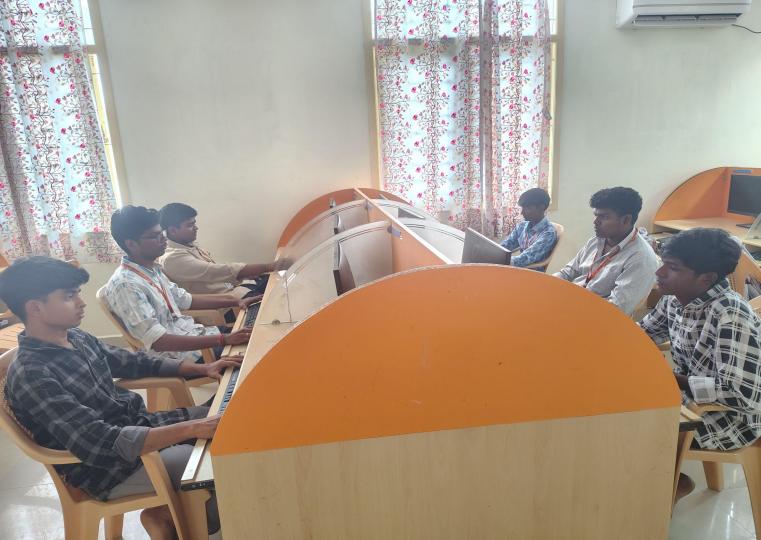
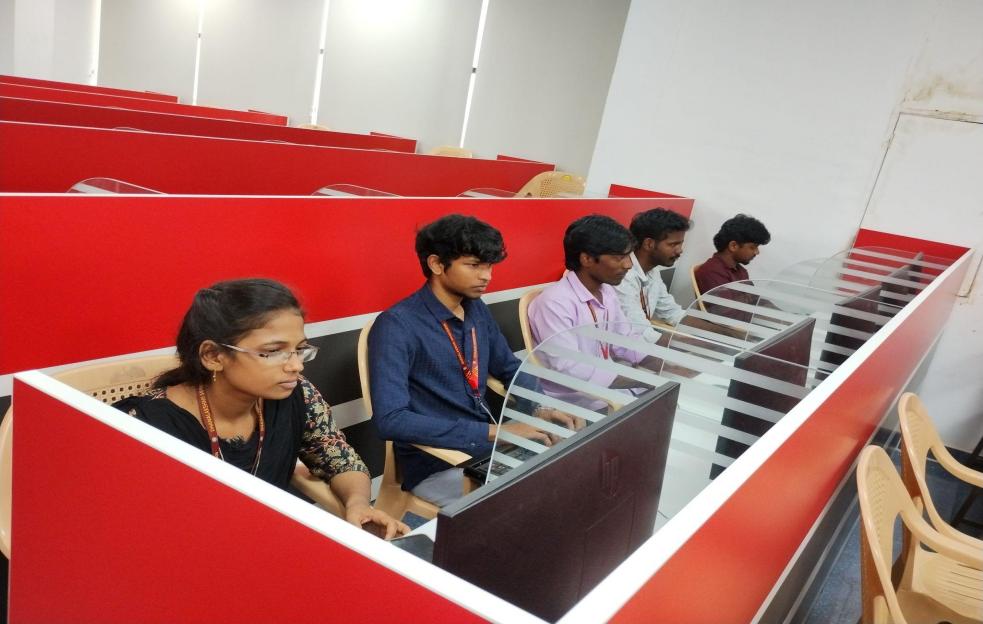
Content Coming Soon
Faculty details will be updated shortly.
Department Library
The Information Technology department has a separate department library to cater to the specific needs of the Information Technology students. The following is the consolidated data related to the department library.
| Category | Details |
|---|---|
| Number of Books | 500 |
| Number of Video Cassettes | — |
| Number of CD-ROMs | — |
| Number of Charts | — |
| Number of Newspapers Subscribed | — |
| Number of International Journals | — |
| Number of National Journals | — |
Patents
| Title | Students Involved | Faculty | Status |
|---|---|---|---|
| Blockchain based cloud storage with verifiable data integrity | — | Dr.K.Ravikumar R.SwarnaTeja P.varalakshmi |
Published |
| Decentralized machine Learning Model training using blockchain technology | — | Dr.K.Ravikumar M.R.Monika S.Jothilakshmi |
Published |
Content Coming Soon
Testing and consultancy details will be updated shortly.
Academic Research – Information Technology
Journals
| Sl. No. | Title of the Paper | Name of the Journal | International / National | Vol. No. / Issue No. / Page No. / Year | Authors |
|---|---|---|---|---|---|
| 1 | Analysis of software cost estimation and debt management based on deep Learning Approaches | Computational and Experimental Science and Engineering (Scopus) | International Journal | Vol: 11-No 2 pp. 3171-3184 May 2025 |
DR.RAVIKUMAR K |
| 2 | Deep Learning based Heart disease Risk prediction using Soft Max deepj scaling gated adverbial Neural Network | RUNDSCHAU (SCOPUS) | International Journal | Vol. 123(4), pp – 209 -233 April 2025 |
DR.RAVIKUMAR K |
| 3 | Implementation of novel Machine Learning Technique using several Meta with Naive Bayes Models to Analyse the Performance of Wave Energy Converters | BIO SCAN (Web of Science) | International Journal | v-19, pp400-405 Nov 2024 |
DR.RAVIKUMAR K |
| 4 | Dual Interactive Wasserstein Generative Adversarial Network Optimised With Remora Optimisation Algorithm-Based Lung Disease Detection Using Chest X-Ray Images | Bio-Inspired Computation (SCI JOURNAL) | International Journal | Vol. 23, No. 3 April 8, 2024 |
DR.RAVIKUMAR K |
| 5 | Diabetes Mellitus prediction using Improved Chaotic Whale Optimization and Data mining techniques | J. Electrical Systems (scopus) | International Journal | 20-5s 2024 |
DR.RAVIKUMAR K |
| 6 | Reinforcement Learning Based Metaheuristic Algorithm For Optimized Load Balancing In Cloud Environment | J. Electrical Systems (scopus) | International Journal | 20-5s 2024 |
DR.RAVIKUMAR K |
| 7 | Preemptive Min Max Optimal Cost Based Scheduling for Improving the Load Balancing in Virtualized Cloud Environment | Springer nature journal (SN Computer Science) (SCOPUS) | International Journal | 753 – 1-12 AUGUST 2024 |
DR.RAVIKUMAR K |
| 8 | Compact Inverted E-shaped open-circuited impedance matching stub bandpass filter for wireless applications | Analog Integrated Circuits and Signal Processing | International Journal | 123:14 Feb 2025 |
DR .SANKARA MALLIGA G |
Content Coming Soon
R&D activities details will be updated shortly.
About the Department
Information Technology (IT) is a specialized branch of engineering dedicated to designing, developing, managing, and securing information systems and digital infrastructure. It covers a wide range of areas such as software engineering, cloud computing, cybersecurity, data analytics, networking, and artificial intelligence. IT professionals engage with advanced technologies including blockchain, the Internet of Things (IoT), big data, and automation to improve efficiency, enhance security, and strengthen connectivity across various sectors. As digital transformation accelerates globally, the IT domain continues to expand, fostering innovation in industries like healthcare, finance, business, and communication. With the growing need for scalable, reliable, and intelligent technological solutions, Information Technology remains a key driver in shaping the digital landscape and advancing global technological progress.
Vision
"To emerge as a leading center in Information Technology education, research, and innovation by promoting the creation and sharing of knowledge, and by nurturing skilled IT professionals who effectively contribute to national development and address global challenges."
Mission
Department of Information Technology is committed to,
- To deliver value-based education in Information Technology through an effective integration of theoretical knowledge, practical exposure, and innovation.
- To encourage research, development, and consultancy in emerging IT domains to meet local, global, societal, and industrial needs.
- To develop technically proficient, ethically responsible, and globally competitive professionals dedicated to lifelong learning and sustainable development goals.
Program Educational Objectives (PEO)
The B. Tech Information Technology programme has the following Programme Educational Objectives (PEOs):
- PEO 1: Graduates of the program will be proficient in identifying, formulating and solving complex problems by applying their knowledge of mathematics, science and Information Technology principles.
- PEO 2: Graduates of the program will be capable of analysing, designing, implementing and managing software projects through continuous learning and use modern tools to meet real-world constraints.
- PEO 3: Graduates of the program exhibit professionalism with ethical attitude, communication, team work and will contribute to society needs.
Key Highlights
Good placement records since from the inception of the program.
Over 50+ students actively participated in Symposiums, Hackathons, Paper Presentations, Conferences, and Workshops at reputed institutions.
Strong industry collaborations with VPS code builder, INETZ technologies, GRASPEAR solutions, and KAIZEN Tech Soft.
Department Details
Milestones
Laboratory Facilities
System Software Laboratory
The objective of the System Software Laboratory is to familiarize students with various open-source operating systems, particularly Linux and Debian-based distributions such as Fedora and Ubuntu. The lab facilitates practical sessions for courses including Data Structures and Algorithm Analysis, C Programming, and Java Programming. It also supports software development projects in C, C++, Java, and Python.
With a high-end projector installed, the laboratory is additionally used for project reviews, training programs, one-credit courses, and value-added courses. Furthermore, MATLAB software is available to support learning and project work. The lab is well-equipped with 40 high-configuration personal computers to ensure an effective hands-on learning experience.
Equipment & Facilities:
- 40 High-Configuration Personal Computers
- Linux / Ubuntu / Fedora Operating Systems
- MATLAB Software
- High-End Projector for Training & Reviews
- Development Environment for C, C++, Java, Python
Network Laboratory
The Network Laboratory offers hands-on training to undergraduate students in the fundamental and advanced concepts of Computer and Communication Networks. It emphasizes experiential learning and supports experimental research in communication networking, with recent contributions in the areas of networking and network security.
The lab enables students to understand the significance of data communication and the Internet in business operations and everyday activities. It demonstrates how communication occurs within data networks and the Internet, highlights various internetworking devices and their functions, and explains the role of protocols in networking.
Equipped with the latest configuration PCs, a well-connected server–client architecture, and structured systems, the laboratory supports the study and practical implementation of networking concepts and routing protocols. Students receive practical training to strengthen their technical expertise and develop solutions for real-time networking challenges. Open-source tools such as NS2, NS3, and Wireshark are utilized to simulate and analyze different network scenarios, thereby enhancing students' practical skills in modern networking technologies.
Equipment & Facilities:
- Latest Configuration PCs with Server–Client Architecture
- Structured Network Systems
- NS2, NS3 Network Simulators
- Wireshark Network Protocol Analyzer
- Routing Protocol Implementation Tools
Cyber Security Laboratory
The Cyber Security Laboratory at DSCET offers students a hands-on learning platform to strengthen their understanding of cybersecurity principles and practices. Equipped with advanced technologies and specialized software, the lab enables students to analyze, test, and secure computer systems in a controlled environment.
Students are provided opportunities to simulate cyberattacks, perform ethical hacking exercises, and develop the ability to detect and mitigate security vulnerabilities. The laboratory creates an interactive and practice-oriented learning environment, empowering students with the technical expertise required to address real-world cyber threats and prepare for successful careers in the ever-evolving field of cybersecurity.
Equipment & Facilities:
- Advanced Cybersecurity Workstations
- Ethical Hacking Tools & Software
- Vulnerability Assessment Platforms
- Network Security Analysis Tools
- Controlled Environment for Security Testing
Laboratory Gallery
Content Coming Soon
Faculty details will be updated shortly.
Department Library
The Information Technology department has a separate department library to cater to the specific needs of the Information Technology students. The following is the consolidated data related to the department library.
Patents
| Title | Students Involved | Faculty | Status |
|---|---|---|---|
| Blockchain based cloud storage with verifiable data integrity | — |
Dr.K.Ravikumar R.SwarnaTeja P.varalakshmi |
Published |
| Decentralized machine Learning Model training using blockchain technology | — |
Dr.K.Ravikumar M.R.Monika S.Jothilakshmi |
Published |
Content Coming Soon
Testing and consultancy details will be updated shortly.
Academic Research – Information Technology
Journals
| Sl. No. | Title of the Paper | Name of the Journal | International / National | Vol. No. / Issue No. / Page No. / Year | Authors |
|---|---|---|---|---|---|
| 1 | Analysis of software cost estimation and debt management based on deep Learning Approaches | Computational and Experimental Science and Engineering (Scopus) | International Journal | Vol: 11-No 2 pp. 3171-3184 May 2025 |
DR.RAVIKUMAR K |
| 2 | Deep Learning based Heart disease Risk prediction using Soft Max deepj scaling gated adverbial Neural Network | RUNDSCHAU (SCOPUS) | International Journal | Vol. 123(4), pp – 209 -233 April 2025 |
DR.RAVIKUMAR K |
| 3 | Implementation of novel Machine Learning Technique using several Meta with Naive Bayes Models to Analyse the Performance of Wave Energy Converters | BIO SCAN (Web of Science) | International Journal | v-19, pp400-405 Nov 2024 |
DR.RAVIKUMAR K |
| 4 | Dual Interactive Wasserstein Generative Adversarial Network Optimised With Remora Optimisation Algorithm-Based Lung Disease Detection Using Chest X-Ray Images | Bio-Inspired Computation (SCI JOURNAL) | International Journal | Vol. 23, No. 3 April 8, 2024 |
DR.RAVIKUMAR K |
| 5 | Diabetes Mellitus prediction using Improved Chaotic Whale Optimization and Data mining techniques | J. Electrical Systems (scopus) | International Journal | 20-5s 2024 |
DR.RAVIKUMAR K |
| 6 | Reinforcement Learning Based Metaheuristic Algorithm For Optimized Load Balancing In Cloud Environment | J. Electrical Systems (scopus) | International Journal | 20-5s 2024 |
DR.RAVIKUMAR K |
| 7 | Preemptive Min Max Optimal Cost Based Scheduling for Improving the Load Balancing in Virtualized Cloud Environment | Springer nature journal (SN Computer Science) (SCOPUS) | International Journal | 753 – 1-12 AUGUST 2024 |
DR.RAVIKUMAR K |
| 8 | Compact Inverted E-shaped open-circuited impedance matching stub bandpass filter for wireless applications | Analog Integrated Circuits and Signal Processing | International Journal | 123:14 Feb 2025 |
DR .SANKARA MALLIGA G |
Content Coming Soon
R&D activities details will be updated shortly.