Agricultural Engineering
About the Department
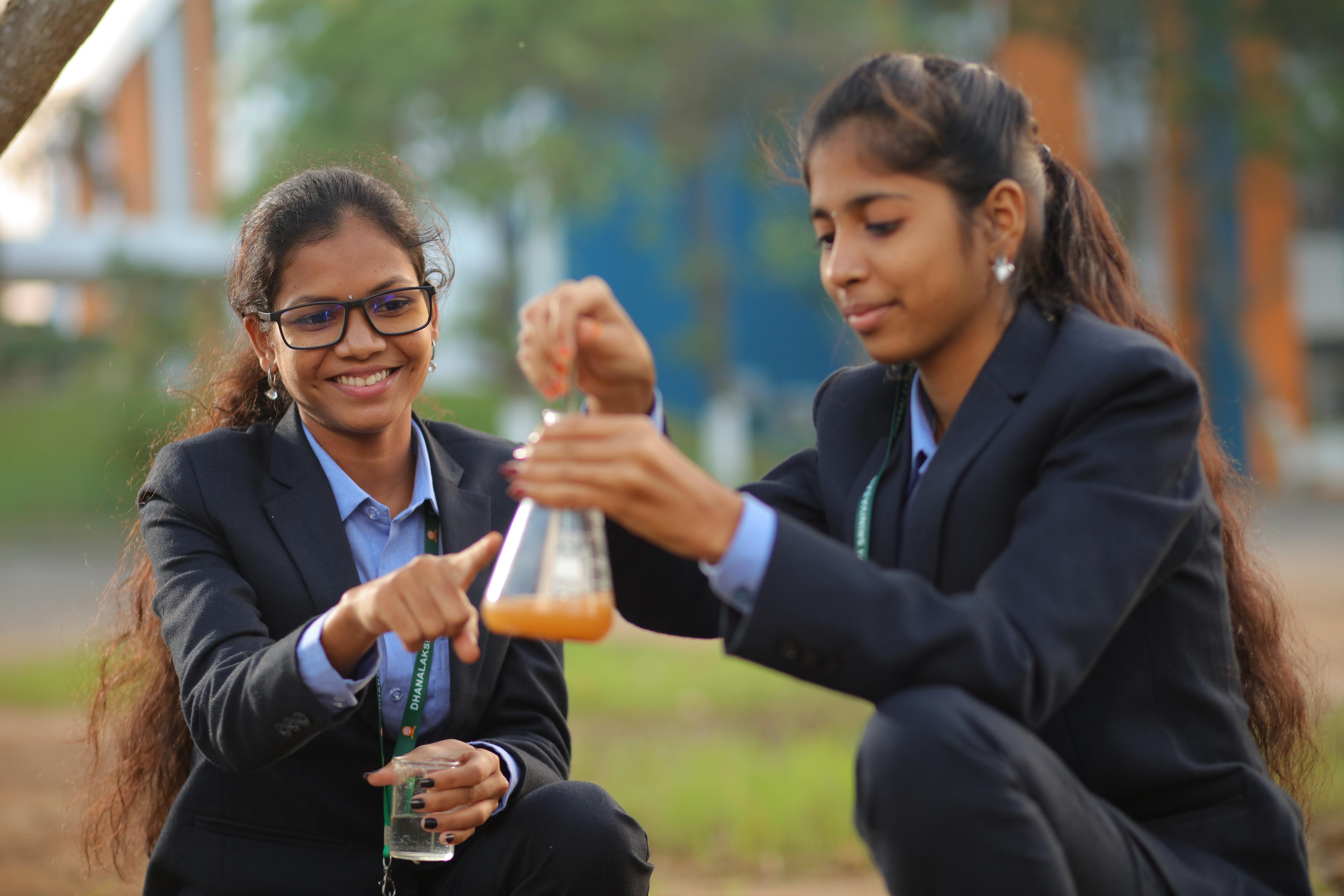
Established in 2019 with an annual intake of 30 students, the Department of Agricultural Engineering is committed to integrating engineering innovation with agricultural science to enhance farm productivity and promote sustainable development. The department focuses on core areas such as Farm Machinery, Irrigation and Water Management, Soil Conservation, Agricultural Processing, and Renewable Energy applications in agriculture. With well-equipped modern laboratories, field-based learning opportunities, and industry-oriented training, students gain strong practical skills supported by solid theoretical knowledge. By emphasizing innovation, sustainability, and real-world problem-solving, the department prepares future engineers to modernize agricultural practices, improve resource efficiency, and contribute meaningfully to food security and rural development.
Department Details
Vision
"To train and produce an Agricultural Engineer with a wealth of knowledge and function effectively for helping the country to attain greater heights in agricultural research."
Mission
Department of Agricultural Engineering is committed to,
- M1: To excel in teaching by offering professional education imbibing ethical and moral values.
- M2: To produce technically strong engineers who could excel in research, development and Agriculture related fields To impart quality Education through effective teaching learning methods.
Program Educational Objectives (PEO)
- PEO 1: Develop diverse capability to work with tractor and implement manufacturing industries, seed processing industries, irrigation and drainage companies and also to run self-entrepreneurship like dairy farming and custom hiring centres.
- PEO 2: Take up higher studies in reputed institutes and motive towards innovative research by applying their skills in agricultural water management, farm machinery and power, processing and energy management systems in agriculture.
- PEO 3: Understand the issues of ethics, safety, professionalism, cultural diversity, globalization, environmental impact and responsibility of serving the society and the environmental issues.
Key Highlights
Consistent and strong placement performance has been maintained since the establishment of the program.
Student projects under TN Skills - Niral Thiruvizha scheme, providing hands-on experience in agricultural innovation.
Value added courses in Biomass Management for Fodder and Energy, Watershed Planning and Management, and Micro Irrigation and System Design.
Department Details
| Category | Details |
|---|---|
| Student Projects | TN Skills - Niral Thiruvizha |
| Workshops & Seminars | — |
| Memorandum of Understanding (MoU) |
|
| Internships | — |
| Value Added Courses |
|
Milestones
Soil Science Laboratory
The Soil Science Laboratory offers practical training in soil analysis and management practices vital for sustainable agriculture. Equipped with modern instruments, students gain hands-on experience in soil sampling, pH and moisture testing, texture and density analysis, organic carbon estimation, and gypsum requirement assessment. The lab integrates field techniques with precise laboratory methods to strengthen understanding of soil fertility, conservation, and effective land management.
- Auger / Core sampler
- Spade and trowel
- Pycnometer
- Hot air oven
- Weighing balance
- pH meter
- EC meter (Conductivity meter)
- Sand pouring cylinder
- Core cutter with rammer
- Mechanical sieve shaker and set of IS sieve
Tractor and Farm Engines Laboratory
The Tractor and Farm Engines Laboratory delivers hands-on training in the operation, dismantling, and reassembly of diesel and petrol engines. Students gain practical exposure to major tractor systems such as the clutch, gearbox, differential, brakes, steering, hydraulics, PTO, and electrical components. Using working models and modern equipment, the lab builds strong understanding of engine mechanics and tractor functions, enabling effective maintenance, troubleshooting, and innovation in farm machinery.
- Working model of Petrol and diesel engine
- Working model of clutch and gear box
- Working model of differential and final drive
- Working model of steering and brake system
- Tractor Model
- Condemned petrol and diesel engine
Farm Machinery Laboratory
The Farm Machinery Laboratory develops practical skills in operating, adjusting, and maintaining diverse agricultural equipment, including tractors, tillage tools, sowing and harvesting machines. Students receive hands-on training in field performance, machinery maintenance, repair, off-season storage, and implement hitching. Exposure to advanced systems such as bulldozers prepares them to efficiently manage and modernize farm operations.
- Tractor
- Power tiller
- Disc plough
- Disc harrow
- Paddy Transplanter
- Seed drill (Manually operated)
- Sprayer (5 lit capacities)
- Mower
- Weeder
Irrigation Field Laboratory
The Irrigation and Meteorology Laboratory trains students in weather monitoring and efficient irrigation practices. It covers system design, flow measurement, and performance evaluation of drip and sprinkler methods. Practical work includes infiltration studies, uniformity testing, and micro-irrigation filtration systems.
- Cup counter anemometer
- Sunshine recorder
- Open pan evaporimeter
- Stevenson's screen - Dry bulb, wet bulb thermometers
- Rain gauge (Recording and Non Recording)
- Digital infiltrometer
- Drip irrigation system with all accessories
- Sprinkler irrigation system with all accessories
- Weighing balance
- Disc filter
Post Harvest and Grain Processing Laboratory
The Post-Harvest and Grain Processing Laboratory offers practical exposure to analyzing grain properties such as moisture content, porosity, friction characteristics, and oil content. Students conduct performance evaluation of equipment including threshers, shellers, dryers, elevators, and conveyors to assess operational efficiency. Industrial visits to modern rice and pulse mills further strengthen their understanding of large-scale grain processing systems.
- Hot air oven, Grain moisture meter
- Porosity apparatus
- Paddy thresher
- Groundnut decorticator and maize sheller
- Thin layer dryer
- LSU dryer
- Bucket elevator
- Screw conveyor
- Rubber roll sheller
- Oil expeller
Renewable Energy Laboratory
The Renewable Energy Laboratory equips students with practical knowledge in bioenergy conversion and sustainable power technologies. It covers biogas systems, gasification, pyrolysis, briquetting, and engine performance evaluation. The lab also focuses on solar thermal and photovoltaic applications along with weather-based energy analysis.
- Muffle furnace
- Junkers gas calorimeter
- Bomb calorimeter
- Gasifier
- Pyrolysis unit
- Briquetting Machine - Lab Scale
- Automatic weather station
- Solar water heater
- Solar dryer
- Solar PV water pumping system
Remote Sensing and GIS Laboratory
The Remote Sensing and GIS Laboratory equips students with skills in photogrammetry, satellite data analysis, and spatial technologies. Practical sessions include image processing, map creation, spatial data editing, and geospatial database handling using GIS tools. The lab emphasizes real-world applications such as terrain modeling, watershed management, hydrological analysis, and erosion studies.
- QGIS Software
- Aerial Photos and Satellite images
- Topo Maps
- Pocket stereoscope with Accessories
- Parallax Bar
- Mirror Stereoscope
- Light table A0 size
Content Coming Soon
Faculty details will be updated shortly.
Department Resources
The Department of Agricultural Engineering maintains a dedicated departmental library to meet the academic and research needs of its students and faculty. Our well-equipped library offers a comprehensive collection of books, journals, and resources covering areas such as farm machinery, irrigation and water management, soil conservation, agricultural processing, renewable energy applications in agriculture, and emerging agricultural technologies. This vast repository of knowledge fosters a strong culture of learning, innovation, and research among students. The calm and focused reading environment provides an ideal space for study and exploration. With access to the latest academic and technical materials, students are empowered to excel in their academic pursuits and develop cutting-edge solutions for real-world agricultural challenges.
| Category | Details |
|---|---|
| Number of Books | 36 |
| Number of Newspapers Subscribed | 3 |
| Number of International Journals | 3 |
| Number of National Journals | 11 |
Content Coming Soon
Patent details will be updated shortly.
Content Coming Soon
Testing and consultancy details will be updated shortly.
Content Coming Soon
R&D academic details will be updated shortly.
Research Activities
Students Projects
| Sl. No. | Funding Agency | Title of the Project | Investigators | Amount (Rupees) | Year | Status |
|---|---|---|---|---|---|---|
| 1 | TN SKILLS | GROUNDNUT DESHELLER | MRS A HEMALATHA | 10,000 | 2025 | Approved |
About the Department
Established in 2019 with an annual intake of 30 students, the Department of Agricultural Engineering is committed to integrating engineering innovation with agricultural science to enhance farm productivity and promote sustainable development. The department focuses on core areas such as Farm Machinery, Irrigation and Water Management, Soil Conservation, Agricultural Processing, and Renewable Energy applications in agriculture. With well-equipped modern laboratories, field-based learning opportunities, and industry-oriented training, students gain strong practical skills supported by solid theoretical knowledge. By emphasizing innovation, sustainability, and real-world problem-solving, the department prepares future engineers to modernize agricultural practices, improve resource efficiency, and contribute meaningfully to food security and rural development.
Vision
"To train and produce an Agricultural Engineer with a wealth of knowledge and function effectively for helping the country to attain greater heights in agricultural research."
Mission
Department of Agricultural Engineering is committed to,
- M1: To excel in teaching by offering professional education imbibing ethical and moral values.
- M2: To produce technically strong engineers who could excel in research, development and Agriculture related fields To impart quality Education through effective teaching learning methods.
Program Educational Objectives (PEO)
- PEO 1: Develop diverse capability to work with tractor and implement manufacturing industries, seed processing industries, irrigation and drainage companies and also to run self-entrepreneurship like dairy farming and custom hiring centres.
- PEO 2: Take up higher studies in reputed institutes and motive towards innovative research by applying their skills in agricultural water management, farm machinery and power, processing and energy management systems in agriculture.
- PEO 3: Understand the issues of ethics, safety, professionalism, cultural diversity, globalization, environmental impact and responsibility of serving the society and the environmental issues.
Key Highlights
Consistent and strong placement performance has been maintained since the establishment of the program.
Student projects under TN Skills - Niral Thiruvizha scheme, providing hands-on experience in agricultural innovation.
Value added courses in Biomass Management for Fodder and Energy, Watershed Planning and Management, and Micro Irrigation and System Design.
Department Details
- Tech Power Solutions Pvt. Ltd
- Biomass Management for Fodder and Energy
- Watershed Planning and Management
- Micro Irrigation and System Design
Milestones
Laboratory Facilities
Soil Science Laboratory
The Soil Science Laboratory offers practical training in soil analysis and management practices vital for sustainable agriculture. Equipped with modern instruments, students gain hands-on experience in soil sampling, pH and moisture testing, texture and density analysis, organic carbon estimation, and gypsum requirement assessment. The lab integrates field techniques with precise laboratory methods to strengthen understanding of soil fertility, conservation, and effective land management.
- Auger / Core sampler
- Spade and trowel
- Pycnometer
- Hot air oven
- Weighing balance
- pH meter
- EC meter (Conductivity meter)
- Sand pouring cylinder
- Core cutter with rammer
- Mechanical sieve shaker and set of IS sieve
Tractor and Farm Engines Laboratory
The Tractor and Farm Engines Laboratory delivers hands-on training in the operation, dismantling, and reassembly of diesel and petrol engines. Students gain practical exposure to major tractor systems such as the clutch, gearbox, differential, brakes, steering, hydraulics, PTO, and electrical components. Using working models and modern equipment, the lab builds strong understanding of engine mechanics and tractor functions, enabling effective maintenance, troubleshooting, and innovation in farm machinery.
- Working model of Petrol and diesel engine
- Working model of clutch and gear box
- Working model of differential and final drive
- Working model of steering and brake system
- Tractor Model
- Condemned petrol and diesel engine
Farm Machinery Laboratory
The Farm Machinery Laboratory develops practical skills in operating, adjusting, and maintaining diverse agricultural equipment, including tractors, tillage tools, sowing and harvesting machines. Students receive hands-on training in field performance, machinery maintenance, repair, off-season storage, and implement hitching. Exposure to advanced systems such as bulldozers prepares them to efficiently manage and modernize farm operations.
- Tractor
- Power tiller
- Disc plough
- Disc harrow
- Paddy Transplanter
- Seed drill (Manually operated)
- Sprayer (5 lit capacities)
- Mower
- Weeder
Irrigation Field Laboratory
The Irrigation and Meteorology Laboratory trains students in weather monitoring and efficient irrigation practices. It covers system design, flow measurement, and performance evaluation of drip and sprinkler methods. Practical work includes infiltration studies, uniformity testing, and micro-irrigation filtration systems.
- Cup counter anemometer
- Sunshine recorder
- Open pan evaporimeter
- Stevenson's screen - Dry bulb, wet bulb thermometers
- Rain gauge (Recording and Non Recording)
- Digital infiltrometer
- Drip irrigation system with all accessories
- Sprinkler irrigation system with all accessories
- Weighing balance
- Disc filter
Post Harvest and Grain Processing Laboratory
The Post-Harvest and Grain Processing Laboratory offers practical exposure to analyzing grain properties such as moisture content, porosity, friction characteristics, and oil content. Students conduct performance evaluation of equipment including threshers, shellers, dryers, elevators, and conveyors to assess operational efficiency. Industrial visits to modern rice and pulse mills further strengthen their understanding of large-scale grain processing systems.
- Hot air oven, Grain moisture meter
- Porosity apparatus
- Paddy thresher
- Groundnut decorticator and maize sheller
- Thin layer dryer
- LSU dryer
- Bucket elevator
- Screw conveyor
- Rubber roll sheller
- Oil expeller
Renewable Energy Laboratory
The Renewable Energy Laboratory equips students with practical knowledge in bioenergy conversion and sustainable power technologies. It covers biogas systems, gasification, pyrolysis, briquetting, and engine performance evaluation. The lab also focuses on solar thermal and photovoltaic applications along with weather-based energy analysis.
- Muffle furnace
- Junkers gas calorimeter
- Bomb calorimeter
- Gasifier
- Pyrolysis unit
- Briquetting Machine - Lab Scale
- Automatic weather station
- Solar water heater
- Solar dryer
- Solar PV water pumping system
Remote Sensing and GIS Laboratory
The Remote Sensing and GIS Laboratory equips students with skills in photogrammetry, satellite data analysis, and spatial technologies. Practical sessions include image processing, map creation, spatial data editing, and geospatial database handling using GIS tools. The lab emphasizes real-world applications such as terrain modeling, watershed management, hydrological analysis, and erosion studies.
- QGIS Software
- Aerial Photos and Satellite images
- Topo Maps
- Pocket stereoscope with Accessories
- Parallax Bar
- Mirror Stereoscope
- Light table A0 size
Content Coming Soon
Faculty details will be updated shortly.
Department Resources
The Department of Agricultural Engineering maintains a dedicated departmental library to meet the academic and research needs of its students and faculty. Our well-equipped library offers a comprehensive collection of books, journals, and resources covering areas such as farm machinery, irrigation and water management, soil conservation, agricultural processing, renewable energy applications in agriculture, and emerging agricultural technologies. This vast repository of knowledge fosters a strong culture of learning, innovation, and research among students. The calm and focused reading environment provides an ideal space for study and exploration. With access to the latest academic and technical materials, students are empowered to excel in their academic pursuits and develop cutting-edge solutions for real-world agricultural challenges.
Content Coming Soon
Patent details will be updated shortly.
Content Coming Soon
Testing and consultancy details will be updated shortly.
Content Coming Soon
R&D academic details will be updated shortly.
Research Activities – Agricultural Engineering
Students Projects
| Sl. No. | Funding Agency | Title of the Project | Investigators | Amount (Rupees) | Year | Status |
|---|---|---|---|---|---|---|
| 1 | TN SKILLS | GROUNDNUT DESHELLER | MRS A HEMALATHA | 10,000 | 2025 | Approved |