Artificial Intelligence and Data Sciences
About the Department
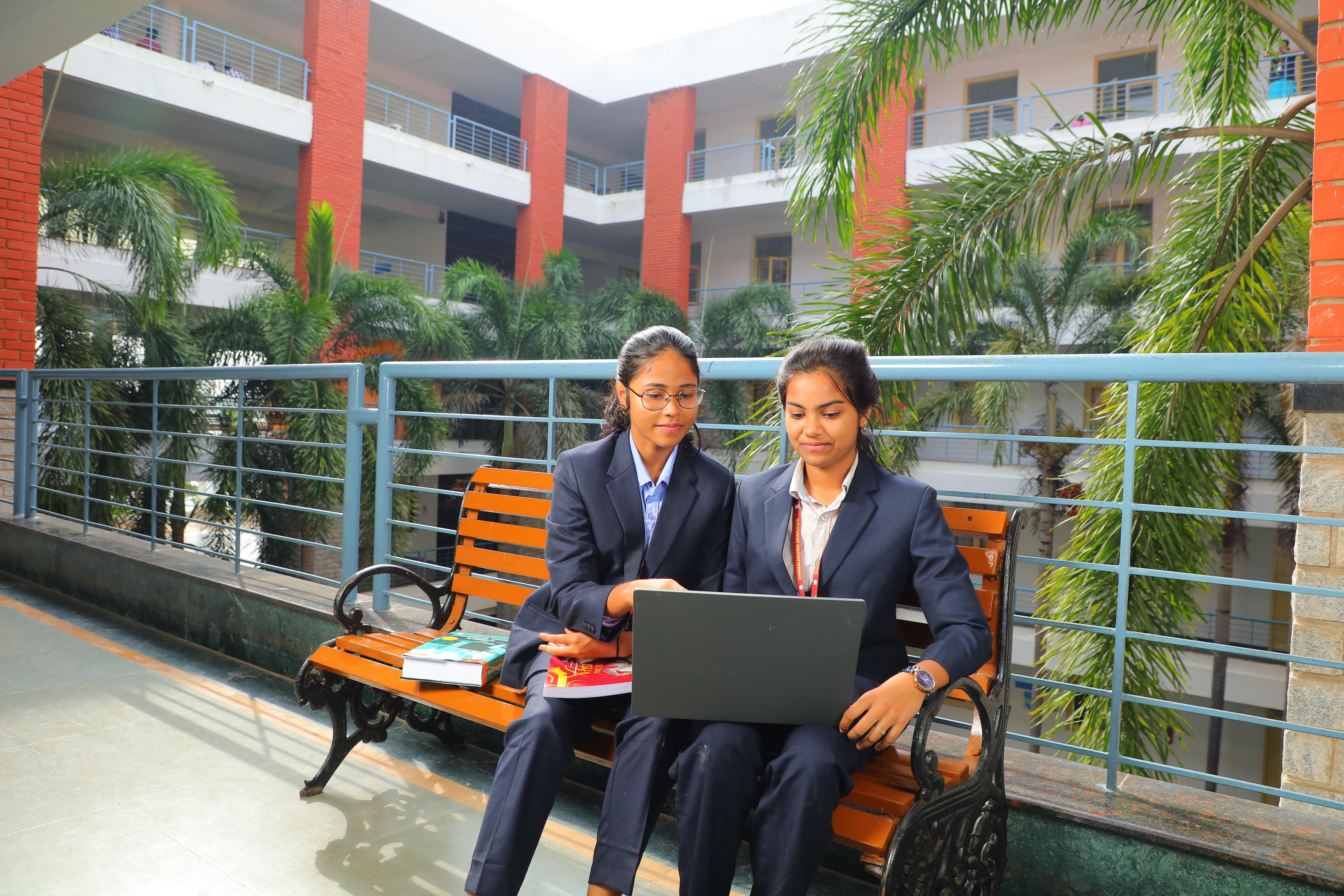
The Department of Artificial Intelligence and Data Science, set up in the year 2021 focuses on developing intelligent systems that can analyse data, learn from experience, and make smart decisions. It combines computer science, mathematics, and statistics to solve real-world problems using advanced technologies like machine learning, deep learning, and big data analytics. The department aims to equip students with technical and analytical skills to handle complex data and build intelligent applications. It encourages innovation and research in areas such as natural language processing, computer vision, and robotics. Students gain practical experience through projects, internships, and industry collaborations. The department also emphasizes the ethical use of AI to ensure responsible and fair technological development. Overall, it prepares learners to become skilled professionals and researchers ready to shape the future of intelligent systems and data-driven decision-making.
Department Details
Vision
"To Spring up as a Centre of excellence in the field of Artificial Intelligence and Data Science and to transfer the students by importing cognitive learning environments with Academia, Research, and Industry collaboration to address global challenges through novelty and sustainability."
Mission
Department of Artificial Intelligence and Data Science is committed to,
- M1: To create next generation professionals who are skilled to perform intelligent data analysis and mimic human intelligence.
- M2: To develop practically trained professionals through the best possible teaching –learning methodology.
- M3: To groom professionals with highly intelligent and ability to solve real-time problems.
Program Educational Objectives (PEO)
- 1. Graduates can utilize their proficiencies in the fundamental knowledge of basic sciences, mathematics, Artificial Intelligence, data science and statistics to build systems that require management and analysis of large volumes of data.
- 2. Advance their technical skills to pursue pioneering research in the field of AI and Data Science and create disruptive and sustainable solutions for the welfare of ecosystems.
- 3. Think logically, pursue lifelong learning and collaborate with an ethical attitude in a multidisciplinary team.
- 4. Design and model AI based solutions to critical problem domains in the real world.
- 5. Exhibit innovative thoughts and creative ideas for effective contribution towards economy building.
Key Highlights
The B.Tech programme in Artificial Intelligence and Data Science is unique with its blend of core concepts in computer science, artificial intelligence, data analytics, and management.
Meritorious students of the B.Tech (AIDS) programme are given global exposure through collaborative projects, research opportunities, and exchange programs with reputed international institutions.
Students gain extensive industry exposure through internships, hands-on workshops, hackathons, expert talks, and corporate-driven projects that bridge the gap between academics and real-world AI applications.
Department Details
| Category | Details |
|---|---|
| NBA Accreditation | — |
| Best Industry Linked Department Award | — |
| Research Centre | — |
| Faculty Members Awards and Fellowships From | — |
| Sponsored Research Projects | — |
| Publications by Faculty in National and International Journals | — |
| Students Awards From | — |
| Student's Projects in Association With | — |
| Memorandum of Understanding (MoU) |
|
| International Certification Course | — |
Milestones
Laboratory Facilities
Machine Learning Lab
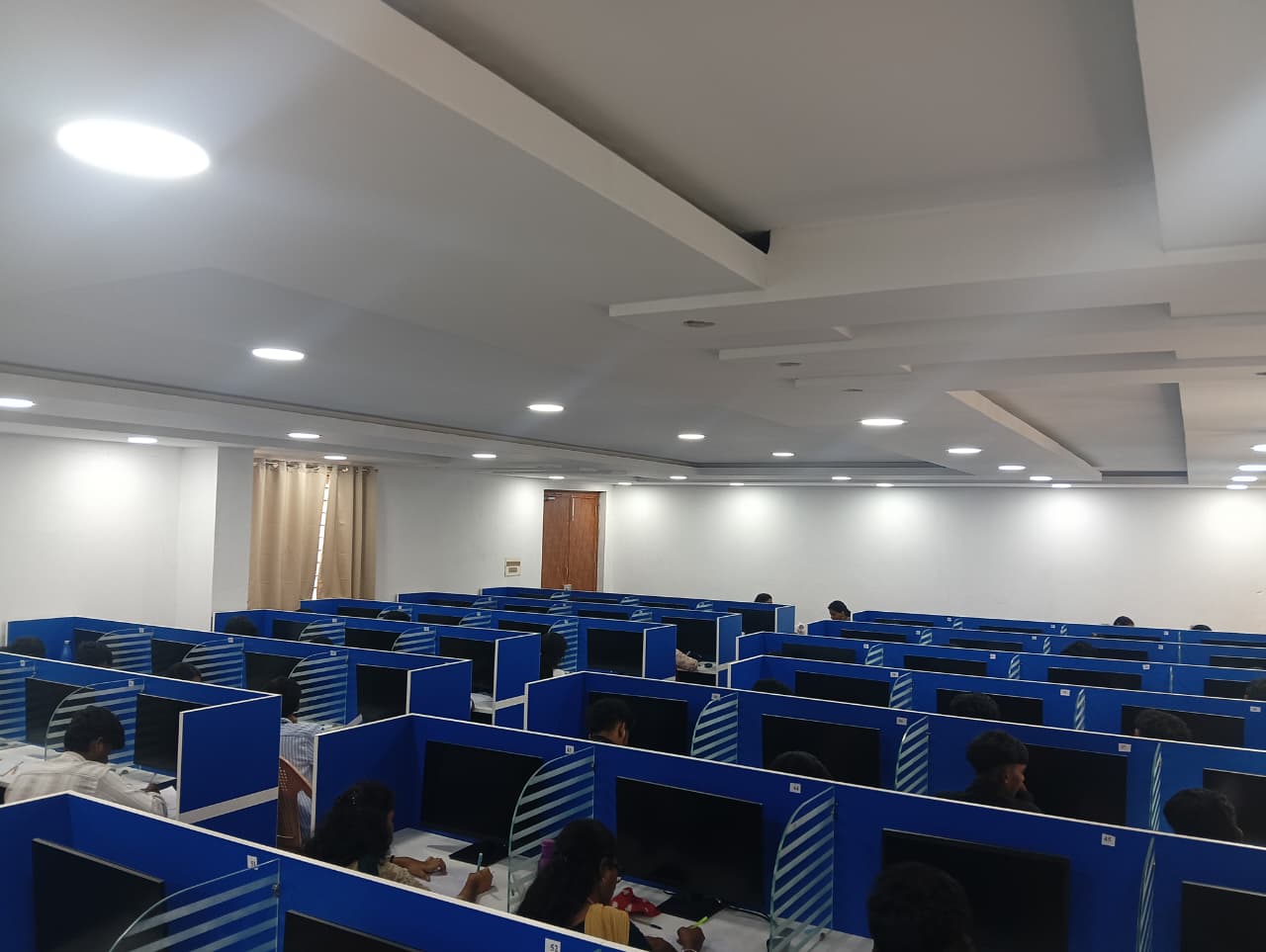
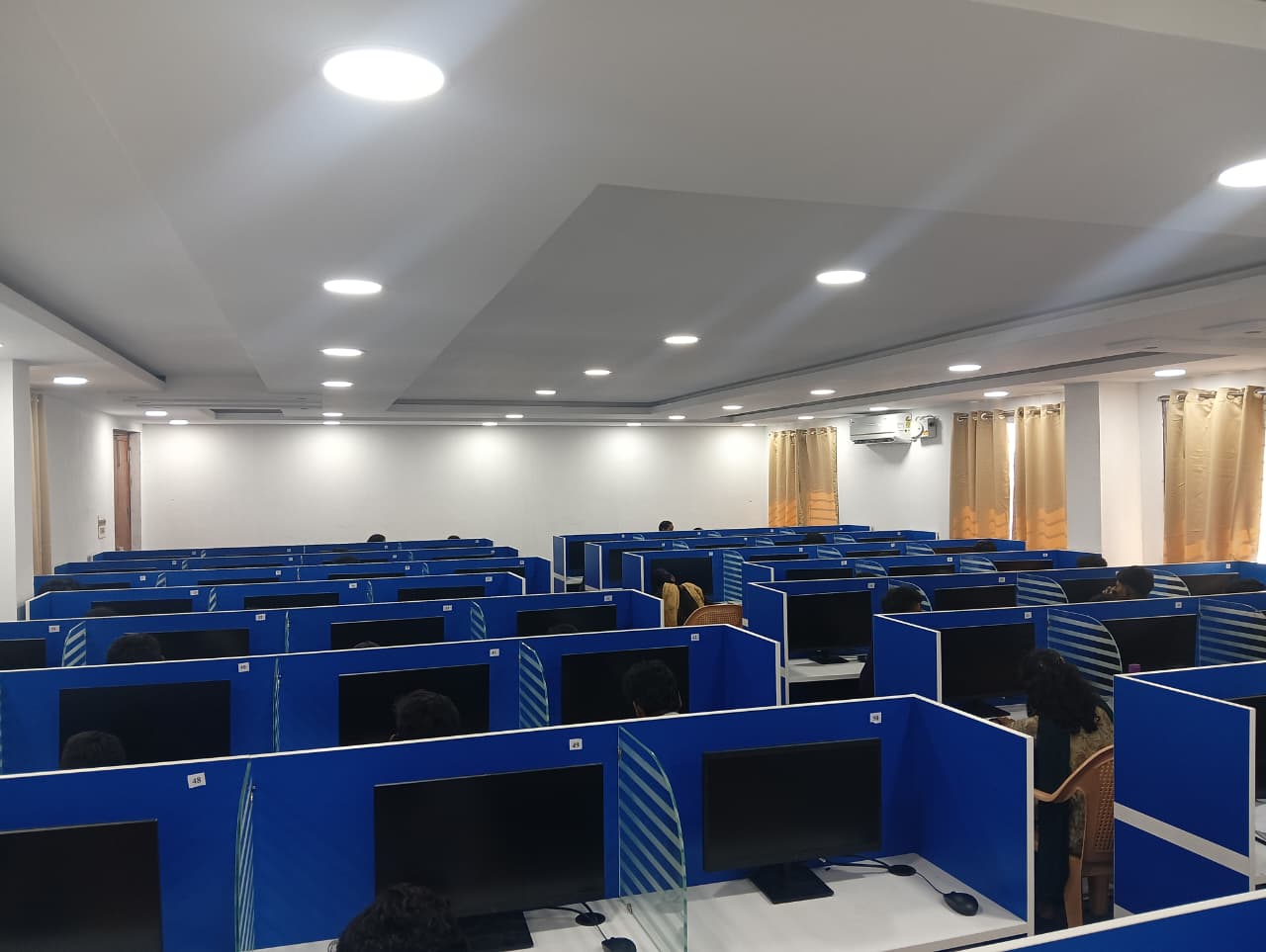
The Machine Learning Laboratory offers hands-on experience in implementing key algorithms for classification, prediction, and clustering using real-world datasets. Students work on methods such as Candidate-Elimination, ID3 decision trees, Artificial Neural Networks, and Naïve Bayes classifiers. The lab also covers Bayesian networks, k-Means, EM clustering, and k-NN for practical data analysis. Performance evaluation using accuracy, precision, and recall is emphasized. Overall, it equips students with essential skills in building and applying machine learning models.
Deep Learning and Neural Networks Lab
The Deep Learning Laboratory provides practical exposure to advanced neural network architectures for solving real-world problems. Students implement Deep Neural Networks to solve the XOR problem and use Convolutional Neural Networks for tasks like character and face recognition. Sequential models such as RNN and LSTM are applied for language modeling and sentiment analysis. Advanced architectures including Sequence-to-Sequence and Encoder-Decoder models are used for tasks like part-of-speech tagging and machine translation. The lab also introduces Generative Adversarial Networks for image augmentation, culminating in a mini-project focused on real-world deep learning applications.
Natural Language Processing (NLP) Lab
The Natural Language Processing Laboratory provides hands-on experience in processing and analyzing textual and speech data using Python and NLTK. Students learn to develop regular expressions for pattern detection and perform tasks such as text searching, vocabulary analysis, frequency distribution, and bigram extraction. The lab includes working with text corpora, identifying frequently occurring non-stop words, and implementing Word2Vec for word embeddings. Advanced topics such as transformer-based classification, chatbot design, text-to-speech conversion, and speech recognition are also explored. Overall, the lab equips students with essential skills in language modeling, speech processing, and real-world NLP applications.
Computer Vision and Image Processing Lab
The Computer Vision Laboratory provides practical exposure to image processing and visual analysis techniques. Students implement image representation methods such as T-pyramid and quad tree decomposition based on intensity homogeneity. The lab covers geometric transformations including rotation, scaling, skewing, affine, and bilinear transforms. Advanced applications such as object detection, facial recognition, and motion analysis using image sequences are explored. Additionally, students develop systems for event detection in video surveillance, enabling real-world vision-based applications.
Laboratories Gallery
Content Coming Soon
Faculty details will be updated shortly.
Department Library
The Artificial Intelligence and Data Science department has a dedicated library to cater to the specific academic and research needs of AI and Data Science students. Our well-equipped library offers a comprehensive collection of books, journals, and digital resources covering areas such as artificial intelligence, machine learning, data analytics, computer science, mathematics, and emerging technologies. This vast repository of knowledge fosters a strong culture of learning, innovation, and research among students. The calm and focused reading environment provides an ideal space for study and exploration. With access to the latest academic and technical materials, students are empowered to excel in their academic pursuits and develop cutting-edge solutions for real-world challenges.
| Category | Details |
|---|---|
| Number of Books | 200 |
| Number of Video Cassettes | — |
| Number of CD-ROMs | — |
| Number of Charts | — |
| Number of Newspapers Subscribed | — |
| Number of International Journals | 2 |
| Number of National Journals | 2 |
Coming Soon
Patent details will be updated shortly.
Coming Soon
Testing and consultancy details will be updated shortly.
Coming Soon
R&D academic details will be updated shortly.
Coming Soon
R&D activities details will be updated shortly.
About the Department
The Department of Artificial Intelligence and Data Science, set up in the year 2021 focuses on developing intelligent systems that can analyse data, learn from experience, and make smart decisions. It combines computer science, mathematics, and statistics to solve real-world problems using advanced technologies like machine learning, deep learning, and big data analytics. The department aims to equip students with technical and analytical skills to handle complex data and build intelligent applications. It encourages innovation and research in areas such as natural language processing, computer vision, and robotics. Students gain practical experience through projects, internships, and industry collaborations. The department also emphasizes the ethical use of AI to ensure responsible and fair technological development. Overall, it prepares learners to become skilled professionals and researchers ready to shape the future of intelligent systems and data-driven decision-making.
Vision
"To Spring up as a Centre of excellence in the field of Artificial Intelligence and Data Science and to transfer the students by importing cognitive learning environments with Academia, Research, and Industry collaboration to address global challenges through novelty and sustainability."
Mission
Department of Artificial Intelligence and Data Science is committed to,
- M1: To create next generation professionals who are skilled to perform intelligent data analysis and mimic human intelligence.
- M2: To develop practically trained professionals through the best possible teaching –learning methodology.
- M3: To groom professionals with highly intelligent and ability to solve real-time problems.
Program Educational Objectives (PEO)
- 1. Graduates can utilize their proficiencies in the fundamental knowledge of basic sciences, mathematics, Artificial Intelligence, data science and statistics to build systems that require management and analysis of large volumes of data.
- 2. Advance their technical skills to pursue pioneering research in the field of AI and Data Science and create disruptive and sustainable solutions for the welfare of ecosystems.
- 3. Think logically, pursue lifelong learning and collaborate with an ethical attitude in a multidisciplinary team.
- 4. Design and model AI based solutions to critical problem domains in the real world.
- 5. Exhibit innovative thoughts and creative ideas for effective contribution towards economy building.
Key Highlights
The B.Tech programme in Artificial Intelligence and Data Science is unique with its blend of core concepts in computer science, artificial intelligence, data analytics, and management.
Meritorious students of the B.Tech (AIDS) programme are given global exposure through collaborative projects, research opportunities, and exchange programs with reputed international institutions.
Students gain extensive industry exposure through internships, hands-on workshops, hackathons, expert talks, and corporate-driven projects that bridge the gap between academics and real-world AI applications.
Department Details
- FIIT Formacion Pvt Ltd, Chennai
- PANTECH E-Learning Pvt Ltd, Chennai
- NeubAItics Tech Pvt Ltd, Chennai
Milestones
Laboratory Facilities
Machine Learning Lab
The Machine Learning Laboratory offers hands-on experience in implementing key algorithms for classification, prediction, and clustering using real-world datasets. Students work on methods such as Candidate-Elimination, ID3 decision trees, Artificial Neural Networks, and Naïve Bayes classifiers. The lab also covers Bayesian networks, k-Means, EM clustering, and k-NN for practical data analysis. Performance evaluation using accuracy, precision, and recall is emphasized. Overall, it equips students with essential skills in building and applying machine learning models.
Deep Learning and Neural Networks Lab
The Deep Learning Laboratory provides practical exposure to advanced neural network architectures for solving real-world problems. Students implement Deep Neural Networks to solve the XOR problem and use Convolutional Neural Networks for tasks like character and face recognition. Sequential models such as RNN and LSTM are applied for language modeling and sentiment analysis. Advanced architectures including Sequence-to-Sequence and Encoder-Decoder models are used for tasks like part-of-speech tagging and machine translation. The lab also introduces Generative Adversarial Networks for image augmentation, culminating in a mini-project focused on real-world deep learning applications.
Natural Language Processing (NLP) Lab
The Natural Language Processing Laboratory provides hands-on experience in processing and analyzing textual and speech data using Python and NLTK. Students learn to develop regular expressions for pattern detection and perform tasks such as text searching, vocabulary analysis, frequency distribution, and bigram extraction. The lab includes working with text corpora, identifying frequently occurring non-stop words, and implementing Word2Vec for word embeddings. Advanced topics such as transformer-based classification, chatbot design, text-to-speech conversion, and speech recognition are also explored. Overall, the lab equips students with essential skills in language modeling, speech processing, and real-world NLP applications.
Computer Vision and Image Processing Lab
The Computer Vision Laboratory provides practical exposure to image processing and visual analysis techniques. Students implement image representation methods such as T-pyramid and quad tree decomposition based on intensity homogeneity. The lab covers geometric transformations including rotation, scaling, skewing, affine, and bilinear transforms. Advanced applications such as object detection, facial recognition, and motion analysis using image sequences are explored. Additionally, students develop systems for event detection in video surveillance, enabling real-world vision-based applications.
Laboratories Gallery
Coming Soon
Faculty details will be updated shortly.
Department Library
The Artificial Intelligence and Data Science department has a dedicated library to cater to the specific academic and research needs of AI and Data Science students. Our well-equipped library offers a comprehensive collection of books, journals, and digital resources covering areas such as artificial intelligence, machine learning, data analytics, computer science, mathematics, and emerging technologies. This vast repository of knowledge fosters a strong culture of learning, innovation, and research among students. The calm and focused reading environment provides an ideal space for study and exploration. With access to the latest academic and technical materials, students are empowered to excel in their academic pursuits and develop cutting-edge solutions for real-world challenges.
Coming Soon
Patent details will be updated shortly.
Coming Soon
Testing and consultancy details will be updated shortly.
Coming Soon
R&D academic details will be updated shortly.
Coming Soon
R&D activities details will be updated shortly.