Food Technology
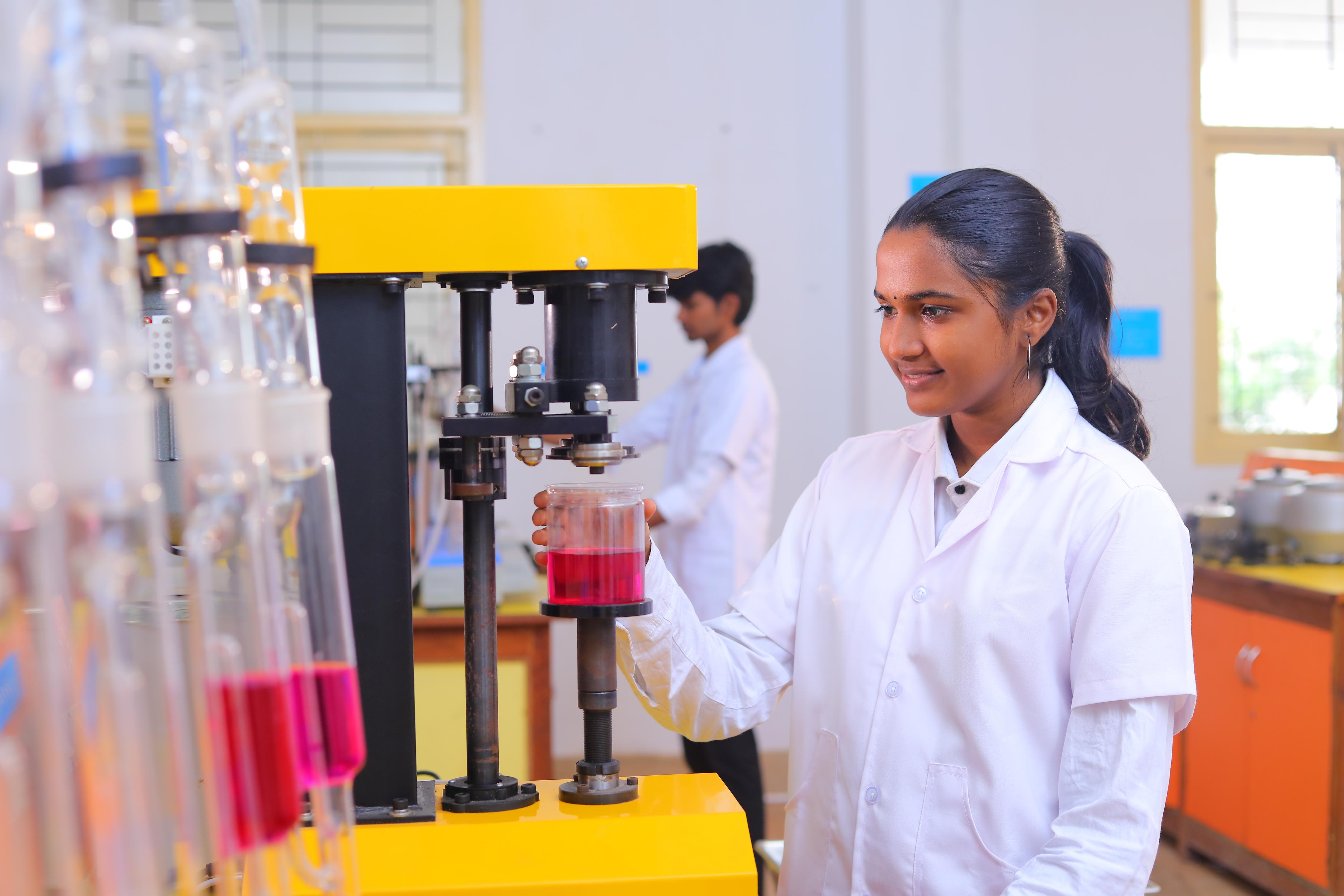
About the Department
The Department of Food Technology, set up in the year 2019 seeks to foster innovation in the food industry and promote the expansion of India's food processing sector within a global framework. Department also seeks to support the government's policy-making efforts related to food processing by examining and revising standards and regulations. The primary goal is to provide knowledgeable and skilled human resources to cater to the needs of the rapidly growing food processing sector. Research work focusing more on Structure and Drying technology. The department has sufficient leisure space for students. Smart TV has been installed in the classrooms for advanced and effective education. The classrooms are quite spacious, well light and ventilated.
Department Details
Vision
"To produce knowledgeable graduates capable of solving major societal issues technical challanges around food processing and associated industries through systematic approaches."
Mission
Department of Food Technology is committed to,
- To excel in teaching by offering professional education imbibing ethical and moral values.
- To produce technically strong engineers who could excel in research, development and food technology related fields.
Program Educational Objectives (PEO)
- PEO 1: To prepare students as a qualified food technologists for Food industries, research organization and teaching.
- PEO 2: To provide students with a solid foundation in basic sciences related to food technology, food science and food technology & engineering.
- PEO 3: To enable the students with good scientific and engineering knowledge so as to comprehend, design, and create food products and device for food industry and provide solutions for the challenges in food industry as well as in agriculture.
- PEO 4: To train students in professional and ethical attitude, effective communication skills, teamwork skills and multidisciplinary approaches related to food technology and engineering.
- PEO 5: To provide student with an academic environment aware of excellence, leadership, written ethical codes and guidelines, and the life-long learning needed for a successful professional career.
Key Highlights
The B. Tech programme is unique with the blend of basic essence of food science, engineering and management.
The meritorious students of B. Tech are given global exposure by arranging visit / work in the partner Institutions abroad.
The students are most exposed to the corporate sector in the form of industry internships, innovative corporate-linking workshops, group discussions and guest lectures.
Department Details
| Category | Details |
|---|---|
| NBA Accreditation | — |
| Best Industry Linked Department Award | — |
| Research Centre | — |
| Faculty Members Awards and Fellowships From | — |
| Sponsored Research Projects | — |
| Publications by Faculty in National and International Journals | 1 |
| Students Awards From | Anna University Gold Medal (Batch-2019-2023) – 2 Students |
| Student's Projects in Association With | — |
| Memorandum of Understanding (MoU) |
|
| International Certification Course | FoSTaC (National level), Internal Auditor Certification Courses (Quality Austria Central Asia) |
Milestones
| Year | Milestone |
|---|---|
| 2024 | 38 students completed Internal Auditor Certification Courses (Quality Austria Central Asia) and FoSTaC (National level) |
Food Chemistry Laboratory
This laboratory provides practical insight into the chemical reactions and functional properties of carbohydrates, proteins, and lipids. Students study key processes such as caramelization, Maillard reaction, hydrolysis, enzymatic browning, emulsion stability, protein foaming, starch gelation, gluten formation, and oil quality analysis. The course builds essential analytical skills for food processing and quality control.
Equipments:
- Colorimeter tubes
- Hunter colorimeter
- Viscometer
- Lovibond Colorimeter
- Magnetic stirrer
- Vortex mixer
- Refractometer
Food Microbiology Laboratory
This laboratory provides practical exposure to the study, identification, and analysis of microorganisms in food and water. Students learn essential techniques such as sterilization, media preparation, culture methods, staining, microscopy, microbial enumeration, and isolation of specific pathogens. Key experiments include total viable count, MPN of water, microbial quality assessment of milk and meat, yeast and mould counts, spore enumeration, thermal destruction studies, and evaluation of cleaning, disinfection, and antimicrobial effects of spices. The course develops fundamental skills in food safety testing, microbiological quality control, and hygiene management in food processing.
Equipments:
- Laminar Airflow Chamber
- Microscope
- Hot Air Oven
- Drying Oven
- Autoclave
- Microbiological Incubator and BOD Incubator
- Fridge (Refrigerator)
- Deep Freezer
- pH Meter
- Colony Counter
Biochemistry and Nutrition Laboratory
This laboratory offers hands-on training in biochemical techniques and nutritional assessment methods. Students practice accurate measurement of volume, weight, and concentration, buffer preparation, and titration procedures. Experiments include qualitative and quantitative analysis of carbohydrates, amino acids, proteins, and lipids using standard biochemical methods, along with enzyme activity assays. The lab also covers nutritional anthropometry such as BMI, body fat estimation, and other body measurements, alongside calorie calculation and comparison of food composition databases. The course builds strong analytical and practical skills relevant to biochemistry, nutrition, and food science.
Equipments:
- TLC Chromatographic chamber
- UV-Vis Spectrophotometer
- Spectroscope
Unit Operations Laboratory
This laboratory offers hands-on training in key unit operations and process engineering principles used in food industries. Students perform experiments on flow measurement devices, evaporators, separators, filtration systems, and absorption units to evaluate operational efficiency. The course also includes analysis of grain properties, particle size determination, and performance assessment of size reduction equipment such as mills. Studies on steam distillation and industrial visits provide practical industry exposure. The lab builds strong technical skills in equipment handling, process evaluation, and engineering analysis relevant to food and process industries.
Equipments:
- Orifice meter
- Venturi meter
- Rotameter
- Centrifugal separator
- Steam distillation unit
- Fluidized bed column
- Rotary flash evaporator
- Cyclone separator
- Ball mill, Hammer mill, Burr mill and Pin mill
Food Processing and Preservation Laboratory
This laboratory provides hands-on experience in food processing and preservation techniques. Students study heat transfer, refrigeration, freezing, drying methods, osmotic dehydration, pasteurization, canning, retort processing, spray drying, and extrusion. The course also includes juice filtration and concentration, along with evaluation of packaging materials through strength, permeability, and migration tests. The lab builds practical skills in thermal processing, dehydration, product development, and packaging quality control for food industries.
Equipments:
- Plate heat exchanger
- Tray dryer
- Refractometer
- Extruder
- RO equipment
- Double seamer machine
- Canning and bottling unit
- Pasteurizer
- Retort unit
- Water vapour permeability tester
Food Analysis Laboratory
This laboratory provides practical training in food analysis and quality evaluation. Students determine moisture, fat, protein, vitamins, minerals, and fibre content using standard analytical techniques such as titration, spectrophotometry, HPLC, and chromatography. The course includes assessment of rancidity in fried foods, antioxidant activity assays, detection of synthetic colours, additives, and common adulterants in food products. Experiments also cover estimation of iron, iodine, and identification of sugars and carotenoids using TLC and column chromatography. The lab strengthens analytical skills essential for food quality control, safety testing, and regulatory compliance in the food industry.
Equipments:
- Heating mantle
- Moisture distillation apparatus with trap
- Butyrometer
- Lock stopper
- Centrifuge 1200 rpm
- Spectrophotometer
- Colorimeter
- Thin layer chromatography
- UV visible spectroscopy
- Incubator
- Fluorescence microplate reader
Content Coming Soon
Faculty details will be updated shortly.
Department Library
The Food Technology department has a separate department library to cater to the specific needs of the Food Technology students. Our well-stocked library provides students with a vast collection of books across various disciplines, fostering a culture of learning and research. With resources covering engineering, management, computer science, and more, students have access to the best academic materials. Our serene reading environment ensures an enriching study experience, helping students excel in their fields. Come and explore the knowledge hub of our institution.
| Category | Details |
|---|---|
| Number of Books | 350 |
| Number of Video Cassettes | - |
| Number of CD-ROMs | - |
| Number of Charts | 11 |
| Number of Newspapers Subscribed | - |
| Number of International Journals | 10 |
| Number of National Journals | 10 |
Content Coming Soon
Patent details will be updated shortly.
Content Coming Soon
Testing and consultancy details will be updated shortly.
Content Coming Soon
R&D academic details will be updated shortly.
Content Coming Soon
R&D activities details will be updated shortly.
About the Department
The Department of Food Technology, set up in the year 2019 seeks to foster innovation in the food industry and promote the expansion of India's food processing sector within a global framework. Department also seeks to support the government's policy-making efforts related to food processing by examining and revising standards and regulations. The primary goal is to provide knowledgeable and skilled human resources to cater to the needs of the rapidly growing food processing sector. Research work focusing more on Structure and Drying technology. The department has sufficient leisure space for students. Smart TV has been installed in the classrooms for advanced and effective education. The classrooms are quite spacious, well light and ventilated.
Vision
"To produce knowledgeable graduates capable of solving major societal issues technical challanges around food processing and associated industries through systematic approaches."
Mission
Department of Food Technology is committed to,
- To excel in teaching by offering professional education imbibing ethical and moral values.
- To produce technically strong engineers who could excel in research, development and food technology related fields.
Program Educational Objectives (PEO)
- PEO 1: To prepare students as a qualified food technologists for Food industries, research organization and teaching.
- PEO 2: To provide students with a solid foundation in basic sciences related to food technology, food science and food technology & engineering.
- PEO 3: To enable the students with good scientific and engineering knowledge so as to comprehend, design, and create food products and device for food industry and provide solutions for the challenges in food industry as well as in agriculture.
- PEO 4: To train students in professional and ethical attitude, effective communication skills, teamwork skills and multidisciplinary approaches related to food technology and engineering.
- PEO 5: To provide student with an academic environment aware of excellence, leadership, written ethical codes and guidelines, and the life-long learning needed for a successful professional career.
Key Highlights
The B. Tech programme is unique with the blend of basic essence of food science, engineering and management.
The meritorious students of B. Tech are given global exposure by arranging visit / work in the partner Institutions abroad.
The students are most exposed to the corporate sector in the form of industry internships, innovative corporate-linking workshops, group discussions and guest lectures.
Department Details
- Parikshan FSS Private Limited
- Vaseegara Veda
Milestones
Laboratories
Food Chemistry Laboratory
This laboratory provides practical insight into the chemical reactions and functional properties of carbohydrates, proteins, and lipids. Students study key processes such as caramelization, Maillard reaction, hydrolysis, enzymatic browning, emulsion stability, protein foaming, starch gelation, gluten formation, and oil quality analysis. The course builds essential analytical skills for food processing and quality control.
- Colorimeter tubes
- Hunter colorimeter
- Viscometer
- Lovibond Colorimeter
- Magnetic stirrer
- Vortex mixer
- Refractometer
Food Microbiology Laboratory
This laboratory provides practical exposure to the study, identification, and analysis of microorganisms in food and water. Students learn essential techniques such as sterilization, media preparation, culture methods, staining, microscopy, microbial enumeration, and isolation of specific pathogens. Key experiments include total viable count, MPN of water, microbial quality assessment of milk and meat, yeast and mould counts, spore enumeration, thermal destruction studies, and evaluation of cleaning, disinfection, and antimicrobial effects of spices. The course develops fundamental skills in food safety testing, microbiological quality control, and hygiene management in food processing.
- Laminar Airflow Chamber
- Microscope
- Hot Air Oven
- Drying Oven
- Autoclave
- Microbiological Incubator and BOD Incubator
- Fridge (Refrigerator)
- Deep Freezer
- pH Meter
- Colony Counter
Biochemistry and Nutrition Laboratory
This laboratory offers hands-on training in biochemical techniques and nutritional assessment methods. Students practice accurate measurement of volume, weight, and concentration, buffer preparation, and titration procedures. Experiments include qualitative and quantitative analysis of carbohydrates, amino acids, proteins, and lipids using standard biochemical methods, along with enzyme activity assays. The lab also covers nutritional anthropometry such as BMI, body fat estimation, and other body measurements, alongside calorie calculation and comparison of food composition databases. The course builds strong analytical and practical skills relevant to biochemistry, nutrition, and food science.
- TLC Chromatographic chamber
- UV-Vis Spectrophotometer
- Spectroscope
Unit Operations Laboratory
This laboratory offers hands-on training in key unit operations and process engineering principles used in food industries. Students perform experiments on flow measurement devices, evaporators, separators, filtration systems, and absorption units to evaluate operational efficiency. The course also includes analysis of grain properties, particle size determination, and performance assessment of size reduction equipment such as mills. Studies on steam distillation and industrial visits provide practical industry exposure. The lab builds strong technical skills in equipment handling, process evaluation, and engineering analysis relevant to food and process industries.
- Orifice meter
- Venturi meter
- Rotameter
- Centrifugal separator
- Steam distillation unit
- Fluidized bed column
- Rotary flash evaporator
- Cyclone separator
- Ball mill, Hammer mill, Burr mill and Pin mill
Food Processing and Preservation Laboratory
This laboratory provides hands-on experience in food processing and preservation techniques. Students study heat transfer, refrigeration, freezing, drying methods, osmotic dehydration, pasteurization, canning, retort processing, spray drying, and extrusion. The course also includes juice filtration and concentration, along with evaluation of packaging materials through strength, permeability, and migration tests. The lab builds practical skills in thermal processing, dehydration, product development, and packaging quality control for food industries.
- Plate heat exchanger
- Tray dryer
- Refractometer
- Extruder
- RO equipment
- Double seamer machine
- Canning and bottling unit
- Pasteurizer
- Retort unit
- Water vapour permeability tester
Food Analysis Laboratory
This laboratory provides practical training in food analysis and quality evaluation. Students determine moisture, fat, protein, vitamins, minerals, and fibre content using standard analytical techniques such as titration, spectrophotometry, HPLC, and chromatography. The course includes assessment of rancidity in fried foods, antioxidant activity assays, detection of synthetic colours, additives, and common adulterants in food products. Experiments also cover estimation of iron, iodine, and identification of sugars and carotenoids using TLC and column chromatography. The lab strengthens analytical skills essential for food quality control, safety testing, and regulatory compliance in the food industry.
- Heating mantle
- Moisture distillation apparatus with trap
- Butyrometer
- Lock stopper
- Centrifuge 1200 rpm
- Spectrophotometer
- Colorimeter
- Thin layer chromatography
- UV visible spectroscopy
- Incubator
- Fluorescence microplate reader
Content Coming Soon
Faculty details will be updated shortly.
Department Library
The Food Technology department has a separate department library to cater to the specific needs of the Food Technology students. Our well-stocked library provides students with a vast collection of books across various disciplines, fostering a culture of learning and research. With resources covering engineering, management, computer science, and more, students have access to the best academic materials. Our serene reading environment ensures an enriching study experience, helping students excel in their fields. Come and explore the knowledge hub of our institution.
Content Coming Soon
Patent details will be updated shortly.
Content Coming Soon
Testing and consultancy details will be updated shortly.
Content Coming Soon
R&D academic details will be updated shortly.
Content Coming Soon
R&D activities details will be updated shortly.